Toronto, 17 Jan 2026
By Shawgi Mustafa
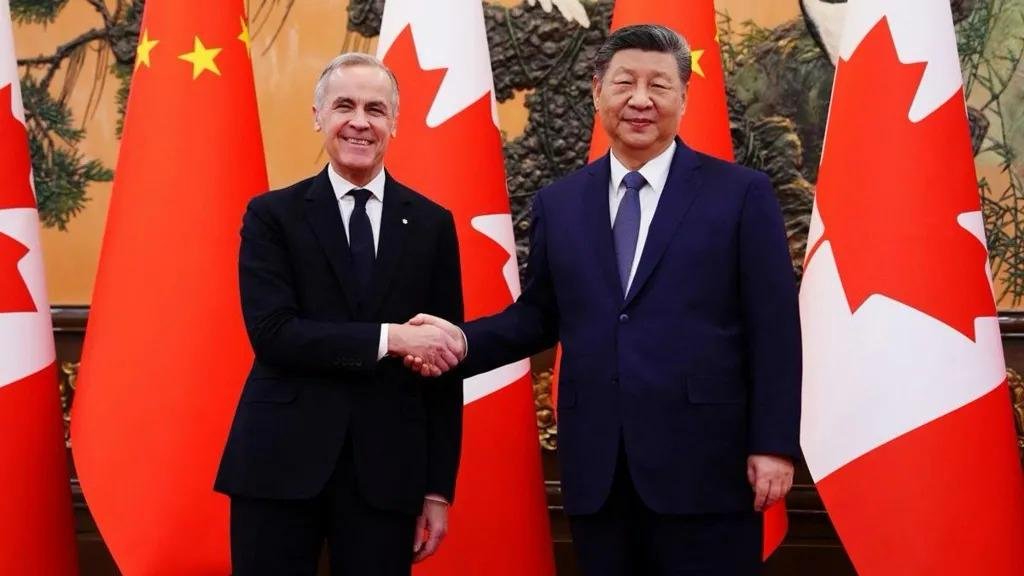
To understand Mark Carney’s trip to Beijing, we must look at our hard Canadian trade. Currently, Canada’s economic relationship with the United States is less of a partnership and more of an addiction. Our exports to our southern neighbour account for nearly 75% of all Canadian exports—it is basically a "one-customer shop" situation.
The Beijing agreement is not just a trade deal; it is a deliberate move to correct a risky over-reliance on the U.S. market. But honestly, can $30 billion or so in trade with China really offset our $450 billion-plus with the U.S.?
This gap has allowed Washington to dictate terms on everything from softwood lumber to dairy for decades.
Canadians know that they cannot out-produce China or the U.S. in scale. Therefore, the strategy has shifted to value over volume—selling high-margin resources to the global market instead of cheap raw materials to a single neighbor.
By dropping the tariff on Chinese EVs to just 6.1% (with a quota of up to 49,000 units), Canada is quietly opening the door for more Chinese tech here. It is not only about cheaper cars for consumers-it's potentially laying the groundwork for joint manufacturing right here in Canada.
Carney is not just looking at China; he is looking at the Capital. By tomorrow he will land in Doha “the missing piece of the puzzle.” While the U.S. provides the market, Qatar provides the liquidity (Sovereign Wealth) to build the infrastructure needed to reach Asia.
As the world's third-largest exporter of LNG, Qatar is a natural partner for Canada’s energy ambitions. By leveraging Qatar’s massive shipping fleet and their existing energy investments in Canada, Carney aims to build a global supply chain that no longer depends on a single buyer.
A lot of friends have been asking me lately: Is China going to replace America as our main partner?
My answer is simple Never. That’s not Carney’s goal, and it's not what most Canadians want either. The real aim is gradually reducing our heavy dependence on the U.S. over the coming decade.
What is happening today between Ottawa and Beijing is not a just a trade deal, it is the direct fallout of a major shift in how Washington treats its closest allies.
For decades, the Canada-U.S. border was like an open door, with goods moving back and forth without a hitch. But the “America First” policy -with its sudden taxes on steel and threats to end trade deals- has changed everything.
For Canadian leaders, the biggest risk is no longer the global market; it is being too dependent on a partner that has become unpredictable.
The Trump administration’s systematic use of trade as a weapon of domestic politics has not just weakened America’s rivals; it has forced its most loyal allies to reconsider where their true safety lies.
Disclaimer: Asian Telegraph Qatar do not accept any responsibility for any comment posted on our website. Any comment does not necessarily represent the views of the Asian Telegraph Qatar, unless where specifically stated otherwise. We reserve the right to unpublish, or delete parts or the entirety of any comments that deemed to be non-conducive to the discussion.