Doha, 21 Jan. 2026
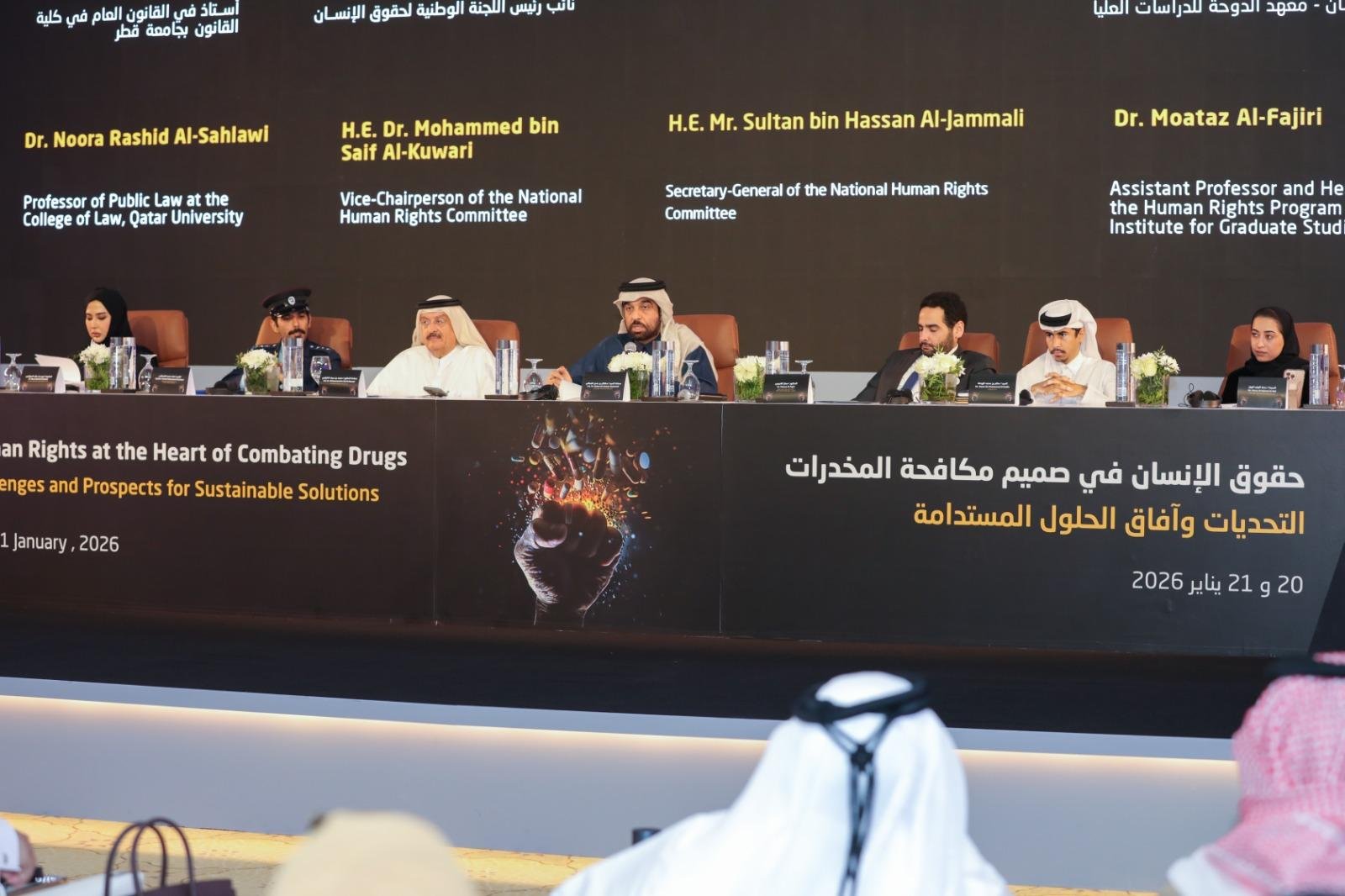
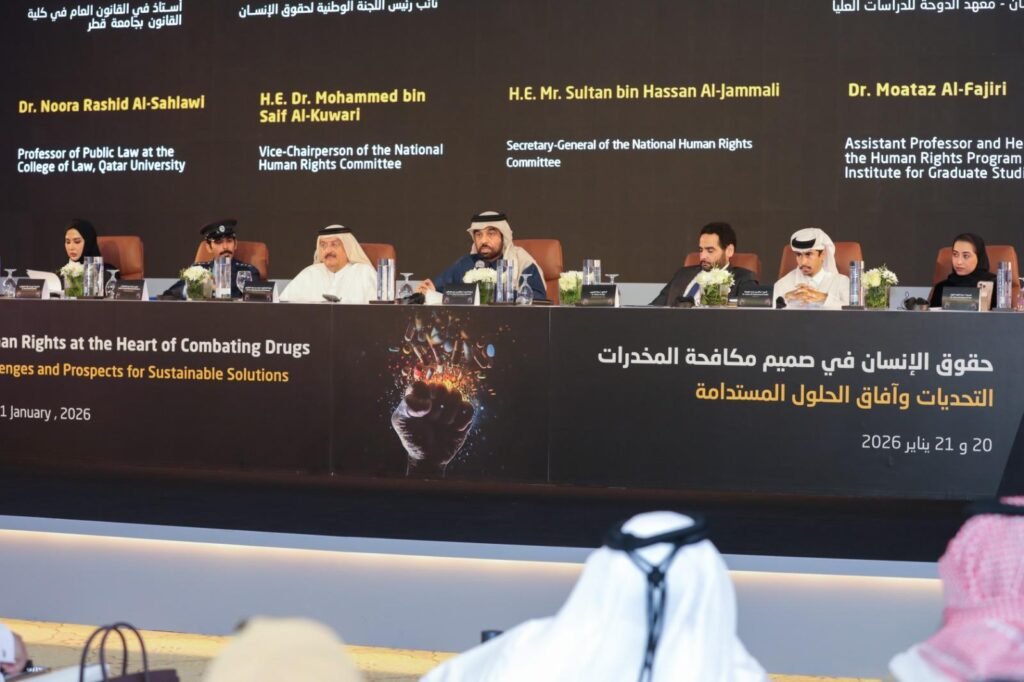
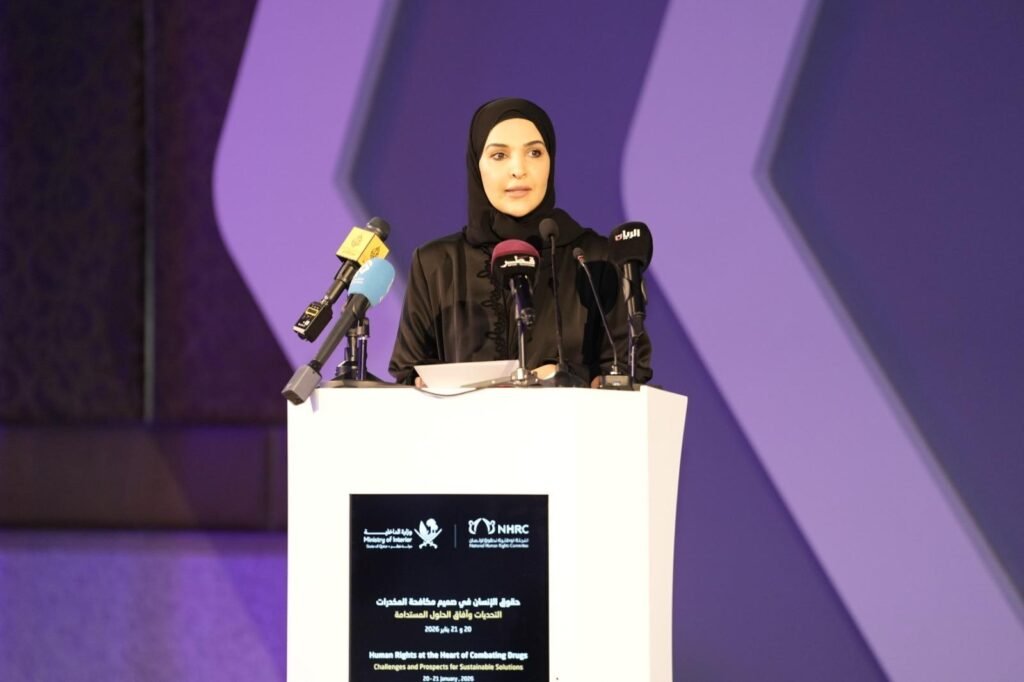
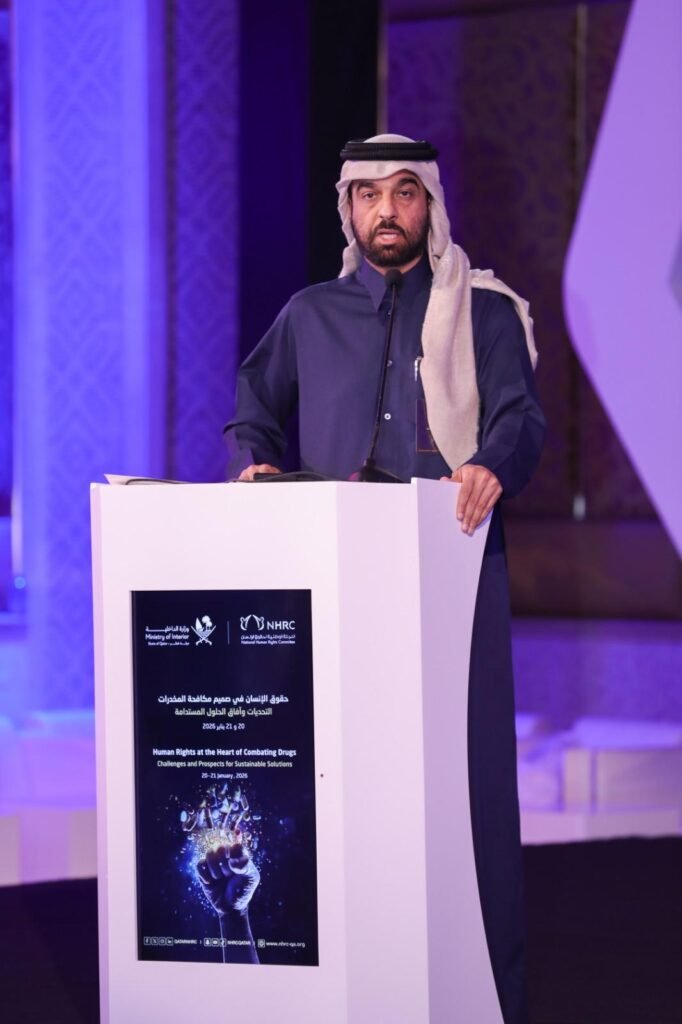
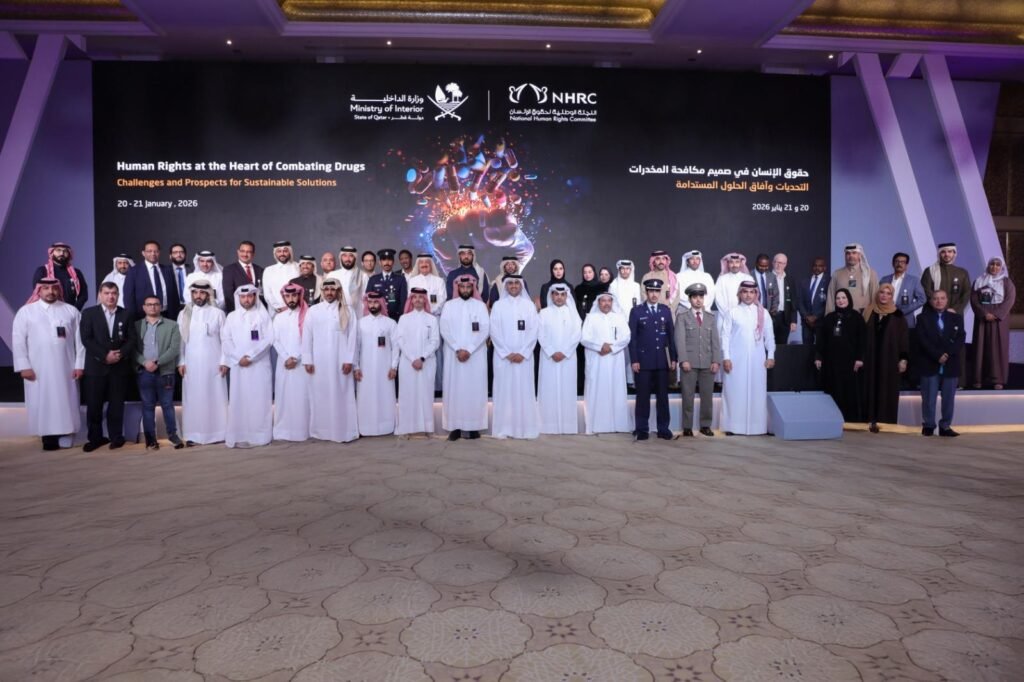
The Fourth National Human Rights Forum concluded in Doha on January 21, 2025, highlighting the need to place human rights at the core of national drug-control efforts. The forum was organized by the National Human Rights Committee (NHRC) in partnership with the Ministry of Interior, and in cooperation with the Ministries of Social Development and Family, Education and Higher Education, and Public Health.
The forum brought together a wide range of national, regional, and international participants, including the Public Prosecution, the National Planning Council, the National Cybersecurity Agency, the GCC Criminal Information Center for Combating Drugs, the United Nations Office on Drugs and Crime, other UN agencies, civil society organizations, media representatives, youth, and experts.
Held under the theme “Human Rights at the Heart of Combating Drugs: Challenges and Prospects for Sustainable Solutions,” the forum focused on balancing strong law enforcement with prevention, treatment, rehabilitation, and social reintegration, while preserving human dignity.
Chairperson of the NHRC, Her Excellency Ms. Maryam bint Abdullah Al-Attiyah, stated that the forum marked a shift from discussion to implementation. She explained that the outcomes provide a national framework that strengthens prevention, supports rehabilitation and reintegration, and ensures that human rights are reflected in all drug-control policies. She stressed that the success of these outcomes depends on transforming them into measurable programs and effective mechanisms that respond to evolving drug-related challenges.
She also highlighted a recommendation to establish a permanent national platform, in partnership with the National Committee for Combating Drugs, bringing together government bodies, international organizations, civil society, experts, and youth. This platform would monitor the implementation of recommendations and ensure their long-term impact.
In the forum’s closing session, His Excellency Mr. Sultan bin Hassan Al-Jumali, Secretary-General of the NHRC, said participants expressed serious concern over the global rise in drug abuse, the emergence of new substances, and the growing influence of organized trafficking networks. These developments, he noted, pose significant threats to human rights, public safety, and social stability.
At the same time, participants praised Qatar’s efforts in combating drugs, particularly the role of the Ministry of Interior and other relevant institutions in prevention, control, rehabilitation, and reintegration. They also welcomed the country’s legislative and policy measures aimed at addressing this issue.
Among the key recommendations was the continuous development of drug-related legislation and public policies to ensure flexibility in addressing new and transnational drug crimes. Participants also called for the creation of a national drug-control index based on human rights principles and a unified data governance system to improve coordination and information sharing.
The forum emphasized treating drug users and addicts as victims in need of care rather than punishment. Recommendations included adopting innovative rehabilitation and social integration approaches, establishing a national fund to support recovering individuals, expanding aftercare services, and protecting them from stigma and discrimination, particularly in employment.
Participants also urged the NHRC to draft a national code of guidelines to ensure respect for human rights in drug-control efforts. They called for ongoing awareness campaigns, training programs, workshops, and cultural activities to raise community awareness, especially among vulnerable groups.

 American Chamber of Commerce Qatar
 Bangladeshi Community
 Filipino Community
 Indian Community
 Nepali Community
 Pakistani Community
 Sri Lankan Community