Tehran, 09 March 2026
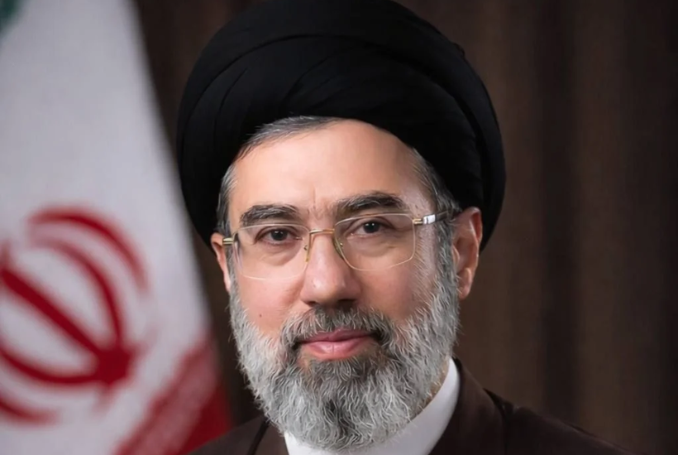
Iran has named Mojtaba Khamenei as the country’s new supreme leader, following the assassination of his father, Ali Khamenei, in joint United States–Israeli strikes that triggered a wider regional war. The decision was announced by Iran’s powerful Assembly of Experts, which is responsible for appointing the nation’s highest religious and political authority.
The 56-year-old cleric was selected roughly a week after his father was killed during the early days of the conflict that began with coordinated attacks by the United States and Israel on February 28. The strikes targeted military and strategic facilities across Iran and reportedly killed several senior officials along with the long-serving supreme leader.
Iranian leaders quickly rallied behind the new appointment. President Masoud Pezeshkian described the decision as the start of “a new era of dignity and strength,” saying it reflects the Iranian nation’s determination to preserve unity in the face of foreign pressure. Foreign Minister Abbas Araghchi also pledged continued commitment to defending Iran’s national interests and the goals of the Islamic Revolution.
Other senior figures echoed similar sentiments. Ali Larijani, secretary of Iran’s Supreme National Security Council, called for unity around the new leader as the country confronts a major security crisis. Parliament Speaker Mohammad Bagher Ghalibaf described loyalty to the new supreme leader as both a national and religious duty.
Mojtaba Khamenei has never held elected office or participated in a public vote, yet he has long been considered a powerful behind-the-scenes figure in Iran’s political establishment. For years he maintained close ties with the Islamic Revolutionary Guard Corps, widely known as the IRGC, and was frequently mentioned as a possible successor to his father, who had ruled since 1989.
Analysts say his selection signals continuity within Iran’s leadership structure and suggests that hardline factions remain dominant. Political analyst Rami Khouri noted that the appointment appears to send a message of defiance to Iran’s adversaries, indicating that the country intends to maintain its current course despite the war.
Meanwhile, tensions with Washington and its allies remain high. U.S. President Donald Trump declined to comment extensively on the leadership change, saying only that “we’ll see what happens.” Senator Lindsey Graham criticized the appointment, suggesting it did not represent the change the United States had hoped to see in Iran.
Elsewhere, global reactions were mixed. Russian President Vladimir Putin expressed strong support for the new leader, while China warned against targeting Iran’s leadership during the ongoing conflict.
As Iran’s new supreme leader assumes power, the country faces one of the most challenging moments in its modern history. The war continues to escalate across the region, leaving uncertainty over whether the leadership transition will bring stability or deepen the confrontation in the weeks ahead.

 American Chamber of Commerce Qatar
 Bangladeshi Community
 Filipino Community
 Indian Community
 Nepali Community
 Pakistani Community
 Sri Lankan Community