Canada, 13 Jan 2026
By Shawqi Mustafa
Canada
Lately, my colleagues in the energy press keep asking the same question: Is the Venezuelan shift finally going to break OPEC+?
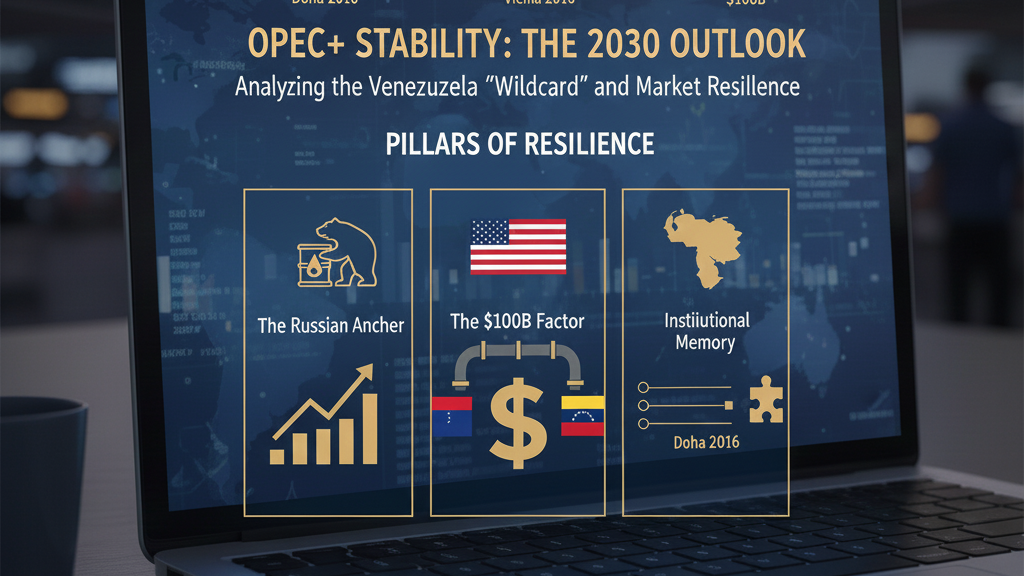
It’s a fair question, but it feels like déjà vu. It takes me back to April 2016 in Doha. This was months before the formal Vienna agreement, back when the alliance was just a whisper. I remember a senior official leaning in during a break and telling me that a "new era of coordination" wasn't just a choice—it was a survival tactic for a market in freefall.
I wrote about it then in a report titled "Oil Diplomacy... Does it Bring Rivals Together?"
Fast forward to today: We see the U.S. eyeing a $100 billion play in Venezuelan infrastructure, and Trump meeting with Big Oil CEOs. Naturally, people wonder if a sudden surge in Venezuelan crude will tempt Russia or the UAE to go their own way.
But here’s why I believe the alliance will remain the market’s anchor through 2030:
Russia’s math is simple:Moscow is funding a massive military effort. They simply cannot afford a price war. For them, breaking ranks isn't just a strategic risk; it’s "shooting themselves in the foot" financially.
- The Price Floor Paradox:That $100B needed to fix Venezuela’s oil fields? It won't appear if prices collapse. Ironically, the very investors Trump is talking to depend on the price stability that only OPEC+ provides.
- Survival over Sentiment:We often hear about regional friction or production capacity debates, but history shows these nations are pragmatists first. They know that a bigger slice of the "market share pie" is worthless if the pie itself is worth pennies.
The reality?
OPEC+ isn't just a technical deal; it’s a geopolitical safety net. Even if Venezuela ramps up, the alliance has spent a decade learning how to absorb these shocks. The cost of failing is just too high for anyone to walk away.
I’m curious to hear from you all—is Venezuela a true "disruptor" this time, or just another variable for the alliance to manage?
#OilAndGas #OPEC #Venezuela #EnergyMarkets #Russia #LinkedInNews
Shawqi Mustafa is a Canada-based journalist and energy analyst, with over 10 years covering energy markets, Diplomats and Business. He has worked for numerous prominent newspapers, and media outlets across Middle EAST. His work focuses on the intersection of global politics and energy economics.
Disclaimer: Asian Telegraph Qatar do not accept any responsibility for any comment posted on our website. Any comment does not necessarily represent the views of the Asian Telegraph Qatar, unless where specifically stated otherwise. We reserve the right to unpublish, or delete parts or the entirety of any comments that deemed to be non-conducive to the discussion.

 American Chamber of Commerce Qatar
 Bangladeshi Community
 Filipino Community
 Indian Community
 Nepali Community
 Pakistani Community
 Sri Lankan Community