Riyadh, February 7, 2026
As part of ongoing efforts to strengthen Gulf cooperation in the field of human rights and institutional capacity building, the National Human Rights Committee (NHRC) conducted a series of official engagements in the Kingdom of Saudi Arabia. These included the signing of a memorandum of understanding for technical cooperation with the Saudi Human Rights Commission, alongside discussions on judicial training cooperation with the Judicial Training Center at the Ministry of Justice.
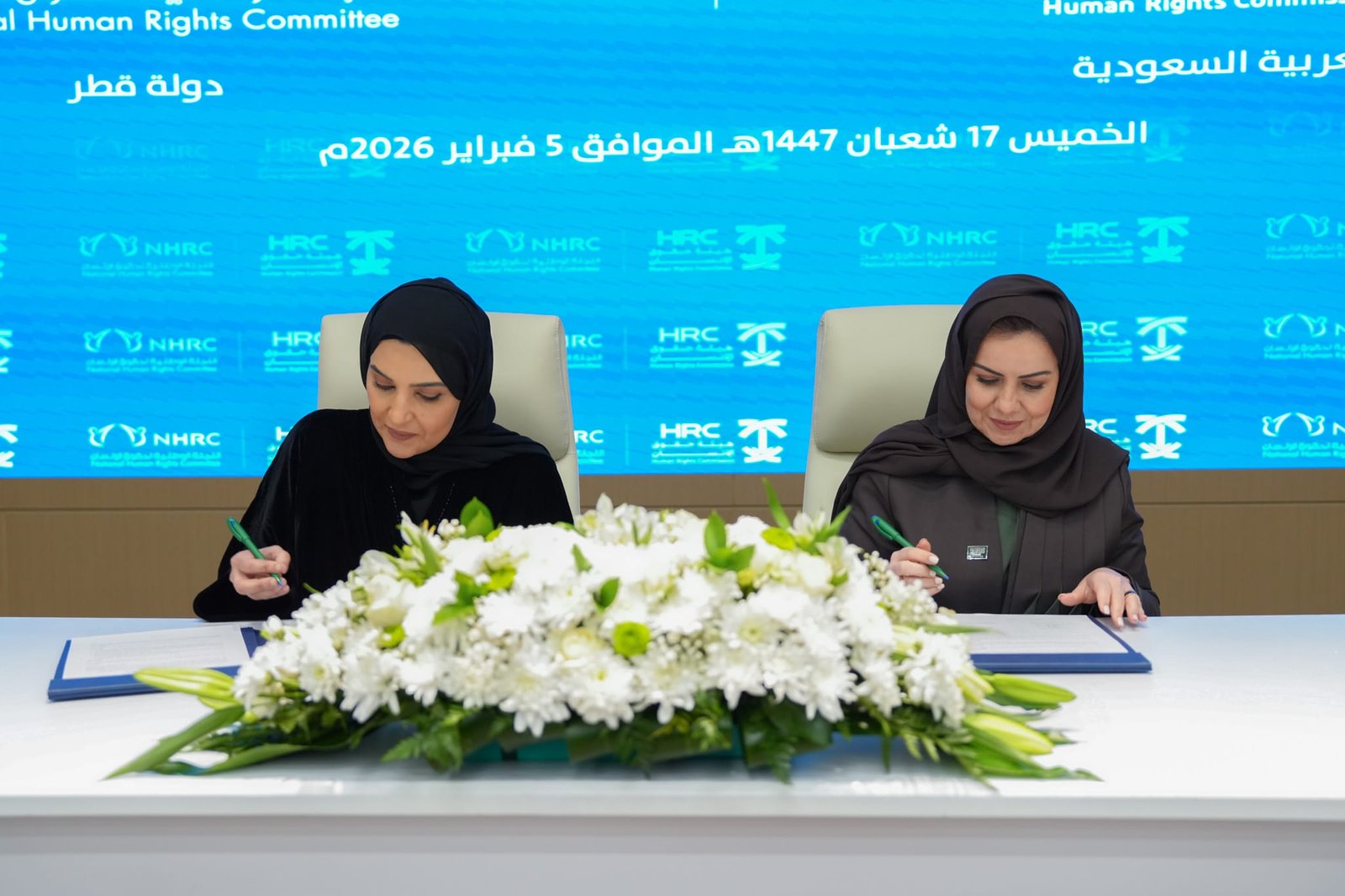
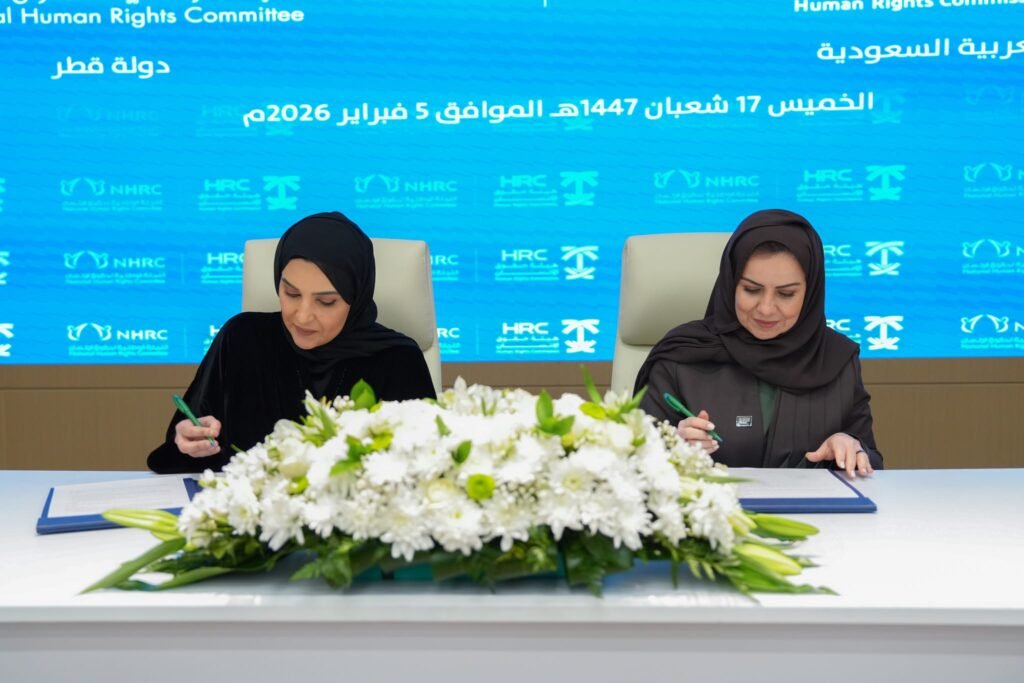
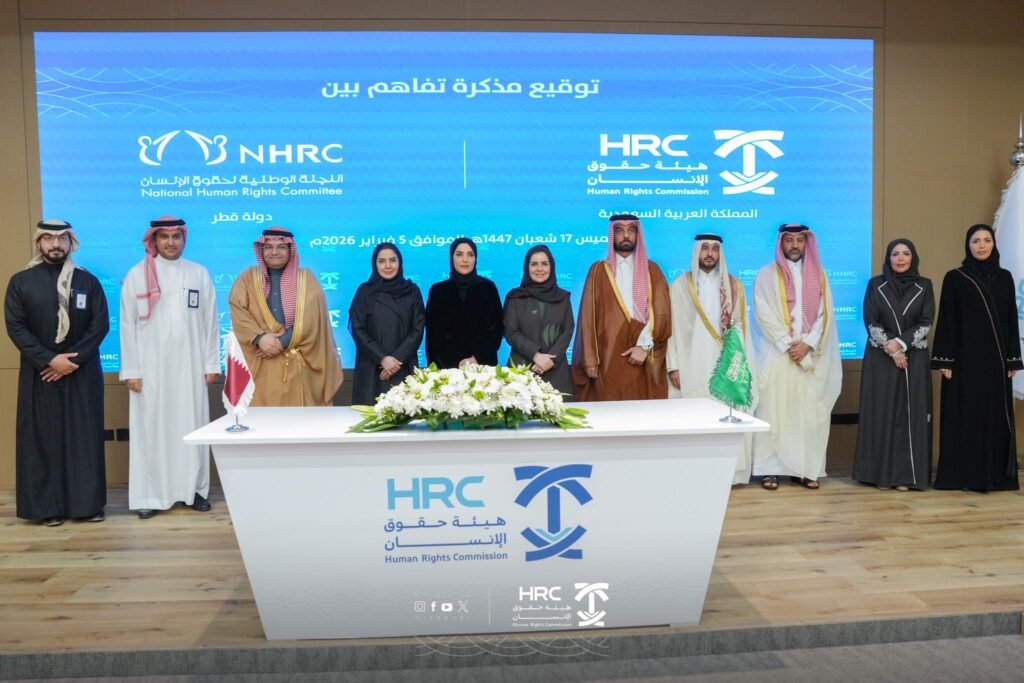
The National Human Rights Committee of the State of Qatar signed the memorandum of understanding with the Human Rights Commission of the Kingdom of Saudi Arabia, marking an important step toward deepening institutional partnership and expanding joint coordination. The agreement aims to enhance cooperation in the protection and promotion of human rights, serve shared interests, and reinforce the principles of justice, equality, and mutual respect between the two institutions.
The memorandum was signed on behalf of the NHRC by Her Excellency Ms. Maryam bint Abdullah Al-Attiyah, Chairperson of the Committee, and on behalf of the Saudi Human Rights Commission by Her Excellency Dr. Hala bint Mazyad Al-Tuwaijri, Chairperson of the Commission.
The agreement focuses on developing technical working mechanisms, exchanging expertise and experiences, and building the capacities of specialized personnel through joint programs and initiatives. It also seeks to support the dissemination of human rights culture, raise community awareness, and strengthen regional cooperation on priority human rights issues across the Gulf region.
Commenting on the occasion, Her Excellency Ms. Maryam bint Abdullah Al-Attiyah stated that the memorandum reflects the Committee’s continued commitment to strengthening Gulf cooperation and exchanging best professional practices. She emphasized that technical partnerships play a key role in enhancing institutional performance, improving the quality of human rights services provided to society, and supporting continuous training and professional development for practitioners in the field.
She added that the agreement opens the door for broader coordination in implementing joint initiatives and exchanging knowledge and expertise, contributing to stronger protection of rights and freedoms and increased legal and human rights awareness. She noted that expanding regional partnerships and exchanging institutional experiences provide valuable opportunities to develop preventive and awareness-based policies and respond effectively to emerging human rights challenges, reinforcing respect for human dignity across society.
The memorandum outlines several areas of cooperation, including joint capacity-building programs, the exchange of studies and research, public awareness initiatives, reciprocal visits, seminars, and joint conferences. It also includes the exchange of information, reports, and publications, with a focus on the rights of persons with disabilities, children, women, and the elderly.
The agreement emphasizes alignment with national legislation in both countries to ensure effective implementation and institutional integration. It will enter into force following the completion of required procedures and remain valid for several years, renewable, ensuring the sustainability of joint initiatives and long-term impact.
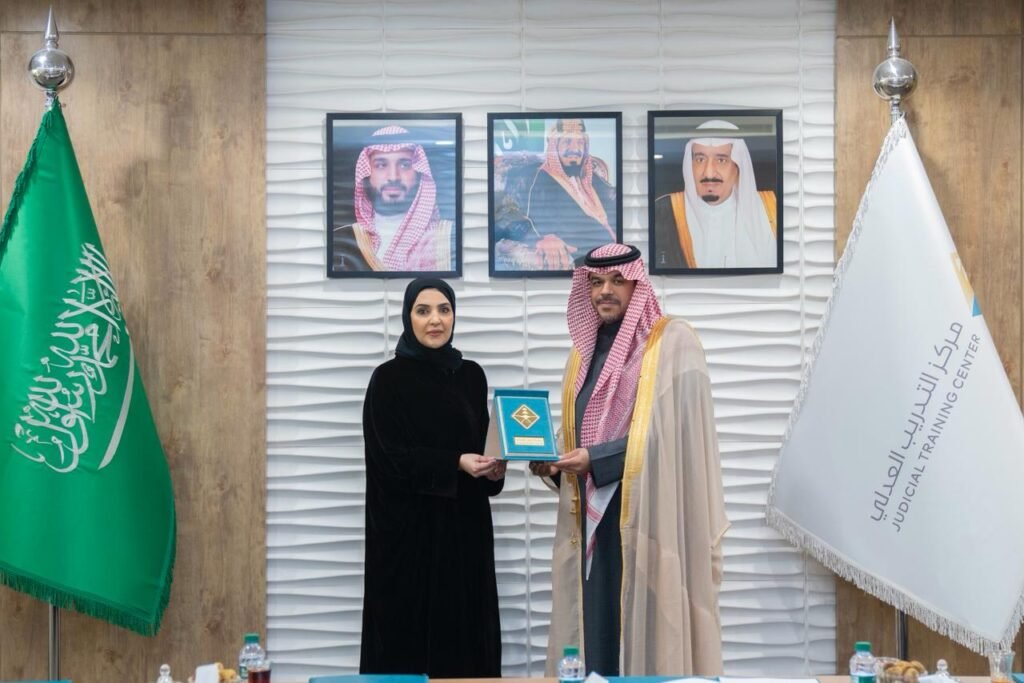
In the same context, Her Excellency Ms. Al-Attiyah met with Dr. Mohammed bin Nasser Al-Shalafan, Director General of the Judicial Training Center at the Saudi Ministry of Justice. The meeting explored cooperation in integrating human rights concepts into judicial and legal training programs, exchanging training initiatives, and developing joint content focused on human rights and international humanitarian law, contributing to a more integrated and sustainable Gulf human rights framework.

 American Chamber of Commerce Qatar
 Bangladeshi Community
 Filipino Community
 Indian Community
 Nepali Community
 Pakistani Community
 Sri Lankan Community