Doha, 28 Nov. 2025
By Ashraf Siddiqui
Doha
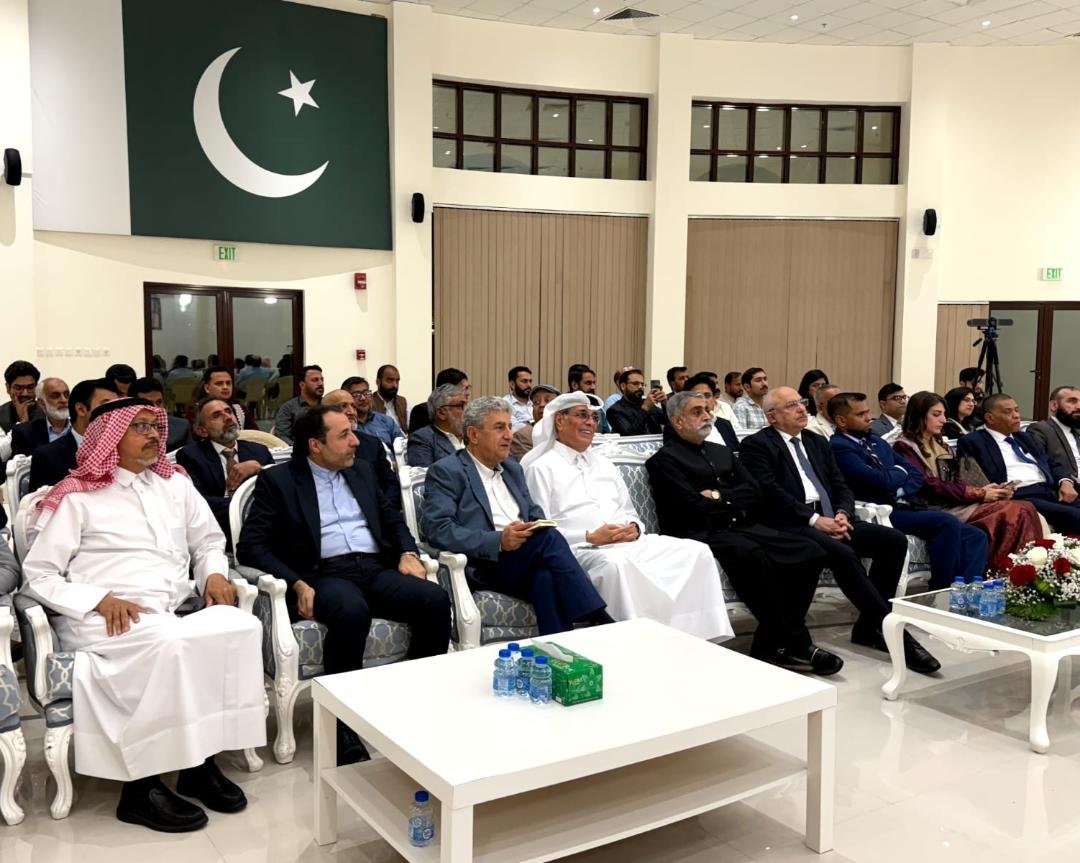
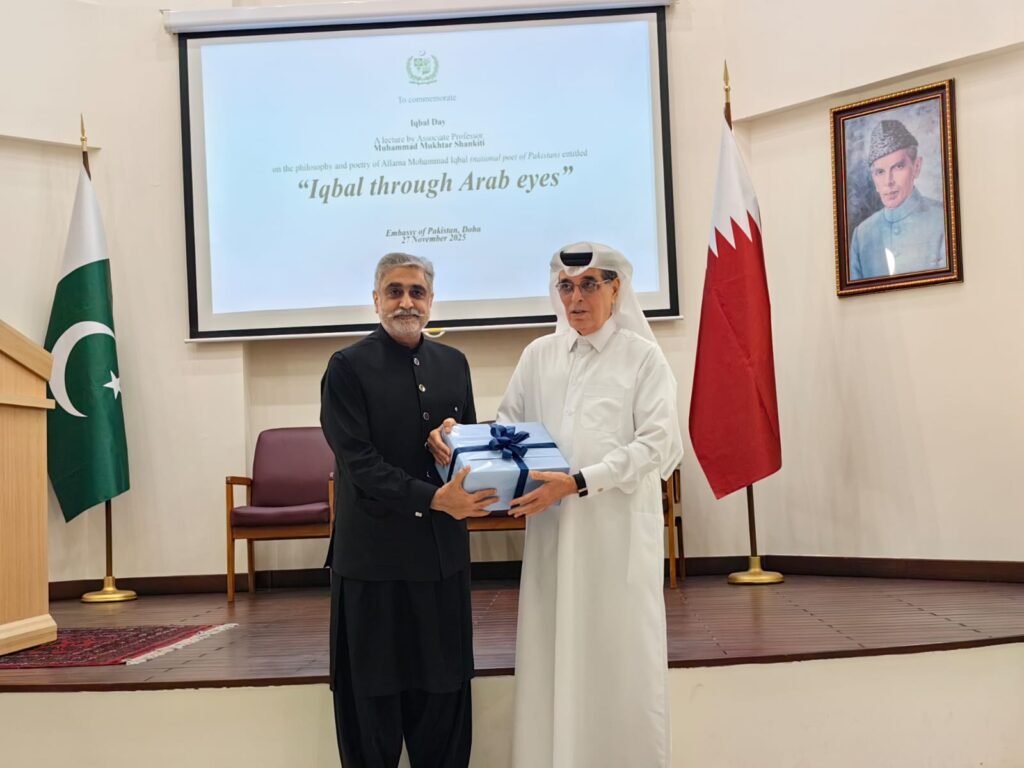
The Embassy of the Islamic Republic of Pakistan in Doha hosted an evening to mark Iqbal Day. The event unfolded less as a formal lecture and more as a profound conversation between cultures. On the evening of Thursday, 27th November 2024, a diverse gathering came together with a shared sense of heritage and intellectual curiosity to celebrate one of the Muslim world’s most luminous minds: Dr. Mohammad Iqbal, the poet-philosopher known as the ‘Poet of the East.’
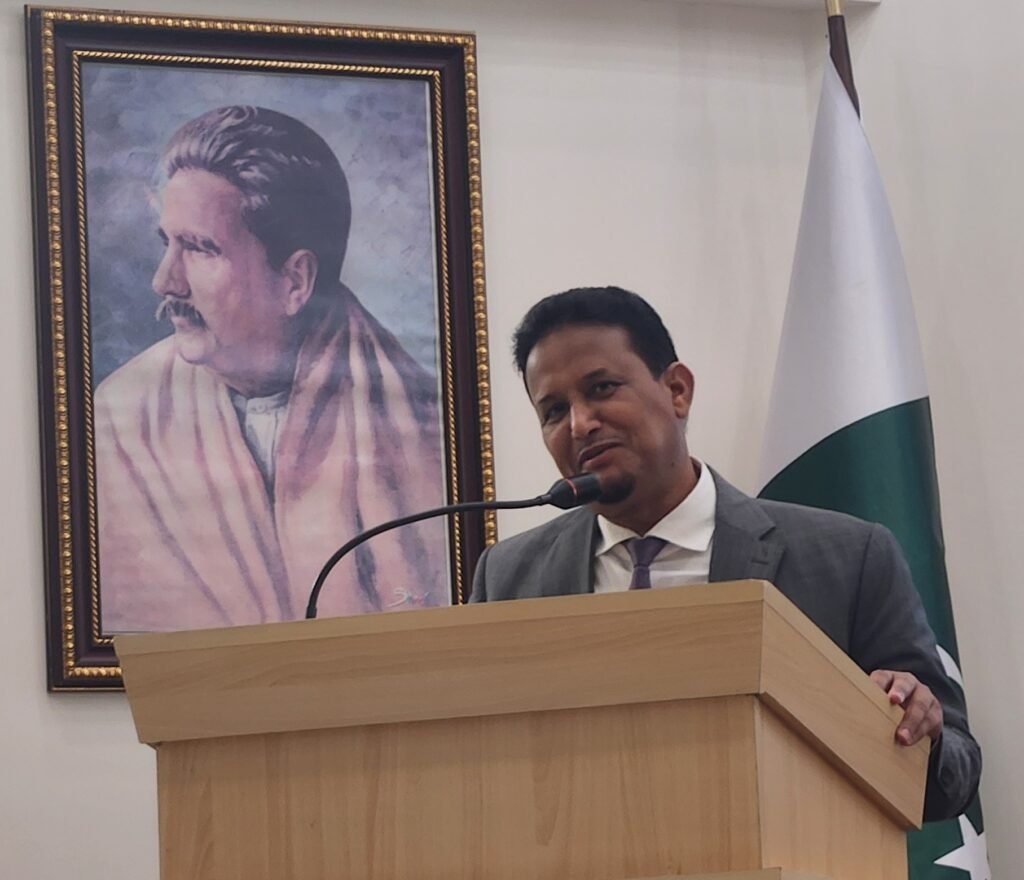
The event, a presentation titled ‘Iqbal Through Arab Eyes,’ was anchored by the insights of a distinguished scholar from Mauritania, Dr. Muhammad Al Mukhtar Al Shinqiti. But the collective presence in the room spoke volumes about Iqbal’s enduring, borderless appeal. The embassy’s auditorium, warmly hosted by Ambassador HE Muhammad Aamer and Deputy Head of Mission Mrs. Attiya, was filled with a tapestry of global citizens. Ambassadors from across the Arab world, Central Asia, the Far East, Africa, and Latin American states mingled with members of the Pakistani community, all united by the thread of Iqbal’s vision. The gathering was graced by the esteemed presence of the Chief Guest, HE Dr. Hamad bin Abdulaziz Al Kuwari, Minister of State, Deputy Prime Minister of the State of Qatar, and President of the Qatar National Library, underscoring the significance that Qatar places on such cultural and intellectual dialogue.
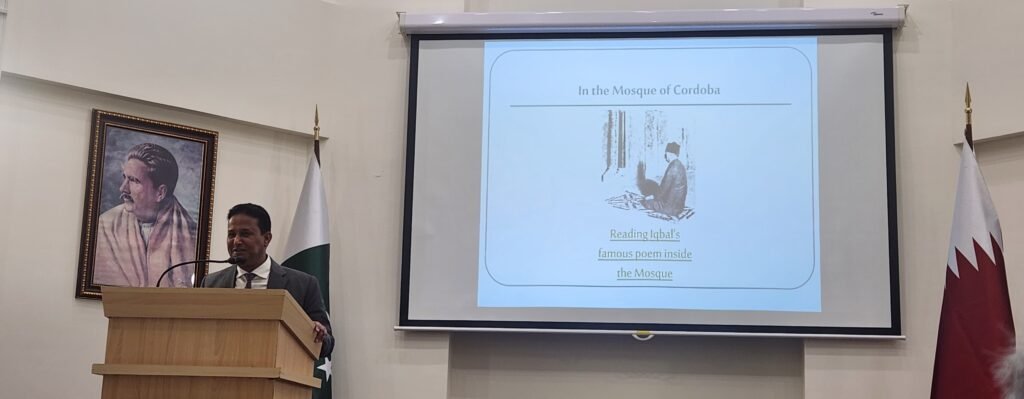
Dr. Al Shinqiti began not with dry academic theory, but with a traveler’s heart. He painted a picture of his personal pilgrimage into Iqbal’s world—a journey that was as spiritual as it was scholarly. He described standing in the historic Mosque of Cordoba, the very stones that had inspired Iqbal’s powerful verses on the rise and fall of civilizations, and reciting the poet’s words there. He spoke of the palpable, almost haunting, intellectual energy he felt while walking through Javid Manzil, Iqbal’s final home in Lahore. And he shared the profound emotion of visiting Mazar-e-Iqbal, the poet’s resting place, where he was moved to compose his own poem in tribute. For Dr. Al Shinqiti, and for the audience he captivated, engaging with Iqbal was clearly a transformative experience, one that resonated in the soul long after the mind had processed the words.
The core of the presentation revealed a truth that many may not have fully appreciated: Iqbal’s profound spiritual and intellectual debt to the Arab world. Dr. Al Shinqiti explained that Iqbal saw himself not merely as a son of the Indian subcontinent, but as a ‘Hijazi breeze’ that had drifted eastward. He believed the very beauty and power of his poetry were drawn from the spiritual wellspring of Arabia—the land of the Prophet Muhammad (peace be upon him). In a beautiful metaphor, Iqbal had written that even if the ‘jar was cast in Persia, the intoxicating "wine" of his inspiration flowed directly from Hijaz’. This was not mere poetic flourish; it was a core tenet of his identity. Dr. Al Shinqiti movingly noted that on his deathbed, Iqbal’s final recitations were verses yearning for another breeze from that blessed land.
This connection was not only spiritual but also intellectually and politically active. The audience learned of Iqbal’s tangible engagements with the Arab world: his participation in the 1931 International Islamic Conference in Jerusalem, where he stood in solidarity with Palestine; his scholarly exchanges in Egypt with figures like Abd al-Wahhab Azzam; and his earnest correspondence with Shaykh Mustafa Al-Maraghi of Al-Azhar, seeking to bridge scholarly traditions. A particularly touching anecdote, relayed by Doris Ahmad, who managed Iqbal’s household, told of an Arab visitor reciting the Qur’an in Iqbal’s home. The philosopher, unable to understand the Arabic words fully but completely captivated by their divine melody, was reduced to tears, his heart laid bare by the sheer beauty of the language.
Dr. Al Shinqiti then guided the audience through the remarkable legacy of the Arab scholars who became Iqbal’s chief translators and champions. He paid homage to pioneers like Abd al-Wahhab Azzam of Egypt, whose translations and biography laid the foundation for ‘Arabic Iqbaliyat.’ He spoke of the extraordinary dedication of blind scholars like Al-Sawi Sha‘alaan and Hussein Mujeeb al-Misri, who, undeterred by their physical limitations, delved into Persian and Urdu to bring Iqbal’s masterpieces into Arabic. The influence was so deep that it even entered popular culture, with the legendary Umm Kulthum lending her immortal voice to a musical rendition of Iqbal’s ‘Hadith-e-Ruh’. From Syria, Abd Al-Mu‘een Al-Malloohi’s scholarly work further cemented the bond, ensuring Iqbal’s voice was heard across the Arab world.
As the lecture drew to a close, Dr. Al Shinqiti left the audience with two powerful messages. First, he reaffirmed that Iqbal is a vast, shared treasure for the entire Muslim Ummah, a pillar of both Pakistani identity and a universal symbol of spiritual revival and unity. Second, he issued a gentle but urgent call to action. Much of the Arabic work on Iqbal, he noted, is decades old. There is a pressing need to renew this intellectual engagement, to re-translate his works into contemporary Arabic, to produce new critical studies, to connect a new generation of Arab scholars with the ongoing work of the Iqbal Academy, and ultimately, to reintroduce Iqbal to the youth.
The evening was a powerful reminder that great thinkers belong to no single nation. As the guests departed, the words of Dr. Al Shinqiti, a Mauritanian Arab scholar speaking in Qatar, about a Pakistani philosopher inspired by Arabia, lingered in the air. They served as a testament to the power of poetry and philosophy to build bridges, reminding everyone present that the quest for dignity, faith, and self-realization that Iqbal championed is a conversation that continues, as relevant and urgent today as it was nearly a century ago.
About the Speaker:
Dr. Muhammad Al Mukhtar Al Shinqiti is himself a formidable intellectual bridge. An Associate Professor of International Affairs at Qatar University with a Ph.D. from the United States, his academic interests span the philosophy of religion, political ethics, and strategic studies. His passion for Iqbal is profound and personal, culminating in a widely read Al-Jazeera article after a 2023 visit to Lahore, which was later expanded into a book in Turkish.
A prolific author, Dr. Al Shinqiti’s twelve books, including "The Constitutional Crisis of Islamic Civilization" and the forthcoming "The Glory of Servitude to God: The Embrace of Truth and Power in Iqbal’s Poetry," explore the intersections of faith, history, and modernity.
His work, translated into over a dozen languages from French to Tamil, and his frequent analytical contributions to Al-Jazeera, demonstrate a commitment to engaging a global audience. In Doha that evening, he was the perfect guide, illuminating how a Pakistani national poet continues to speak powerfully to, and through, the Arab world.

 American Chamber of Commerce Qatar
 Bangladeshi Community
 Filipino Community
 Indian Community
 Nepali Community
 Pakistani Community
 Sri Lankan Community





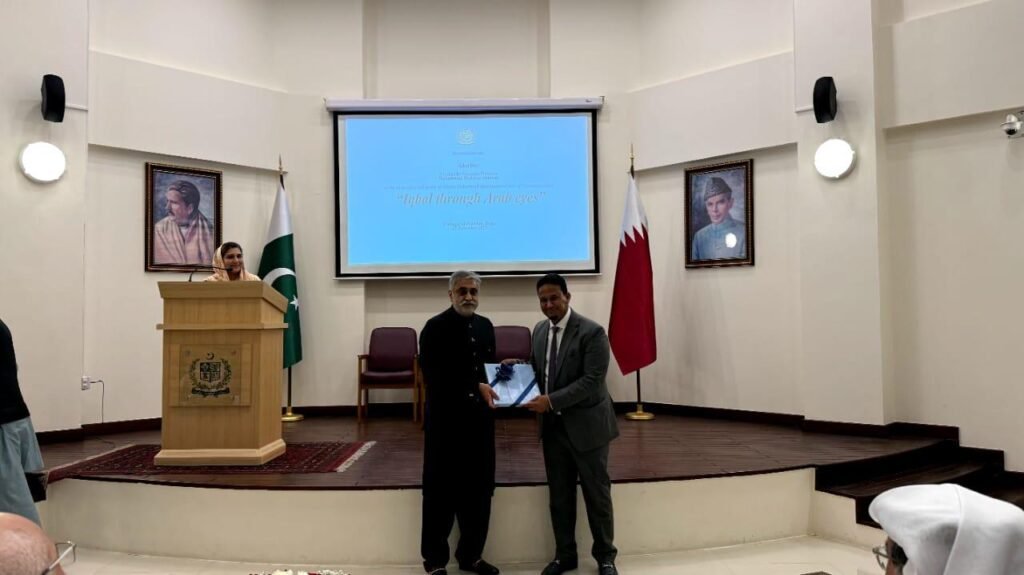
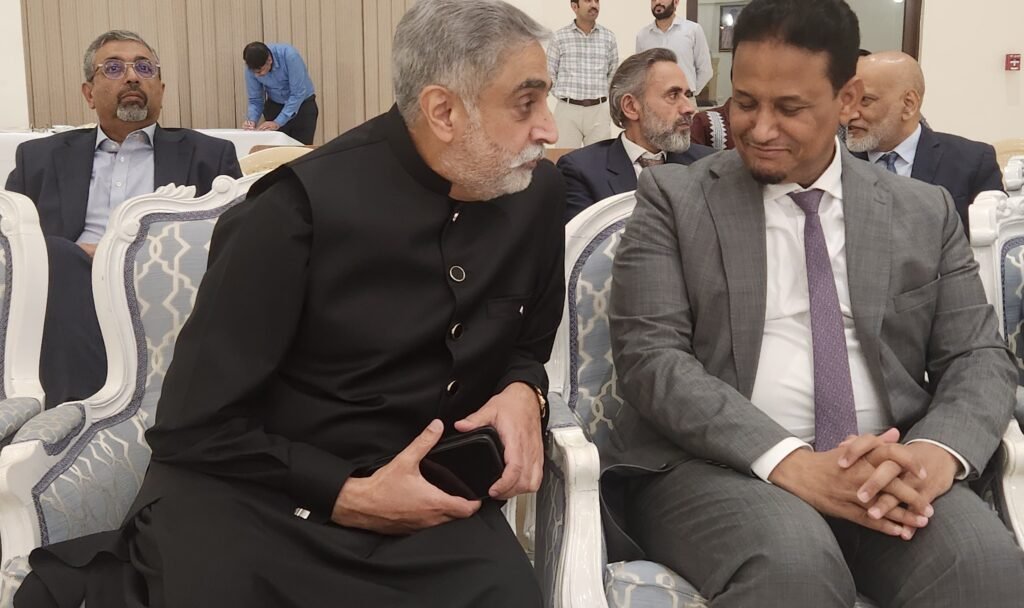
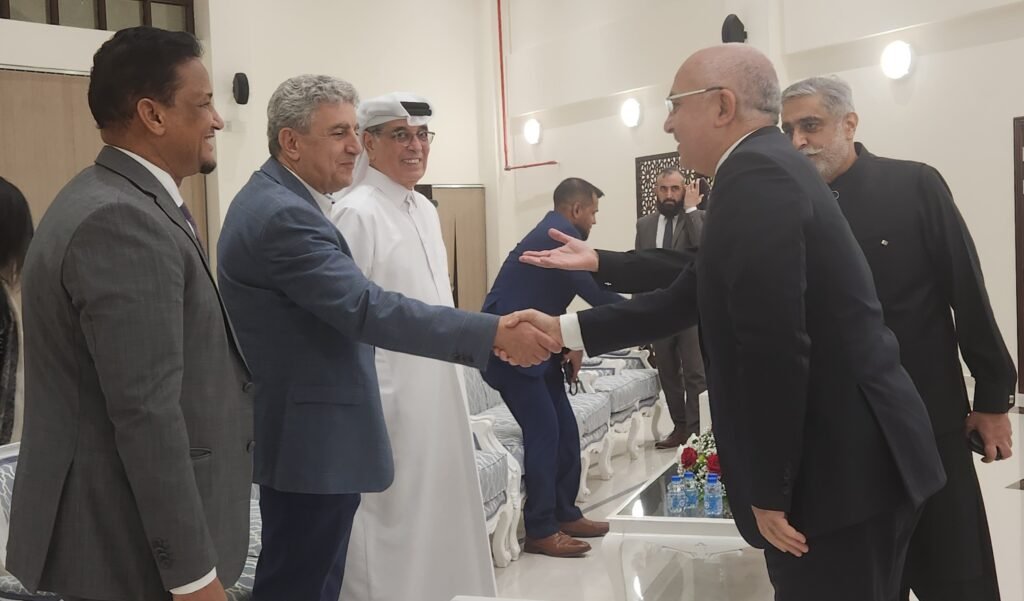
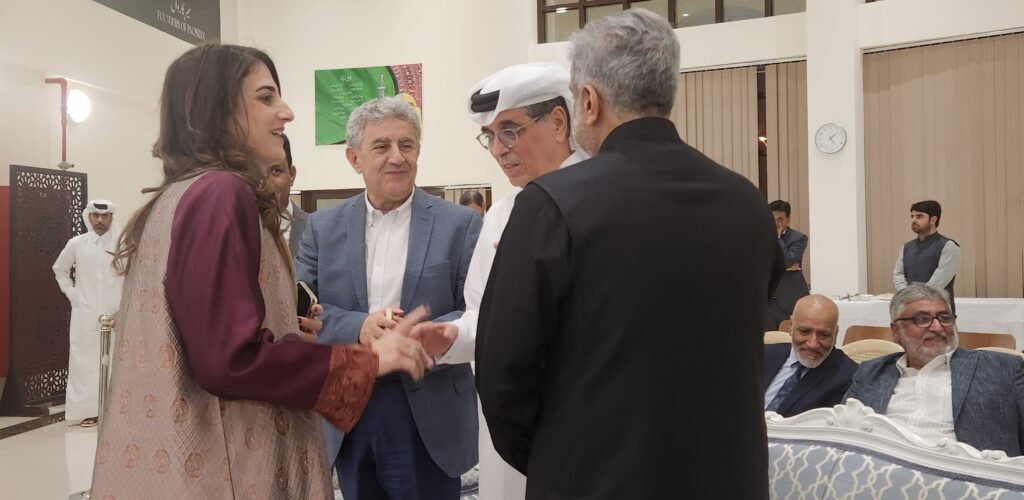







The presentation “Iqbal Through Arab Eyes” offers a powerful reflection on Iqbal’s universal message. Dr. Al Shinqiti’s insights beautifully connect cultures, showing Iqbal’s relevance across the Muslim world and beyond. The diverse gathering, hosted by the Embassy of Pakistan, underscores the poet’s timeless influence. The distinguished presence of HE Dr. Hamad bin Abdulaziz Al Kuwari further elevates the occasion, making it a truly inspiring intellectual exchange.
A special acknowledgment goes to Mr. Ashraf Siddiqui for his clear, elegant, and insightful reporting. His coverage captures the depth of the event with accuracy and grace, helping readers feel its cultural and intellectual spirit.
Excellent coverage of the event at the Pakistan embassy at Doha Qatar attended by dignitaries of many countries. The talk “Iqbal Through Arab Eyes” by Dr Al Shinqiti’s was a fantastic way of paying tribute to poet & philosopher Mohammad Iqbal of Muslim world who worked tirelessly to guide humanity with Islamic principles and philosophy. MashaAllah
A perfect narrative.
Heading speaks itself.
Gratitude to the writer for bridging worlds — may Iqbal’s message continue to inspire hearts across nations His poetry and philosophy encourage introspection, self-empowerment and a connection between East and West — something the world needs more than ever.